Protective Glove Safety Standards
Mechanical Protection
EN 388:2016
The EN 388 standard describes the test procedures for determining the performance levels of certain mechanical risks. The pictogram is marked with five or six level values.
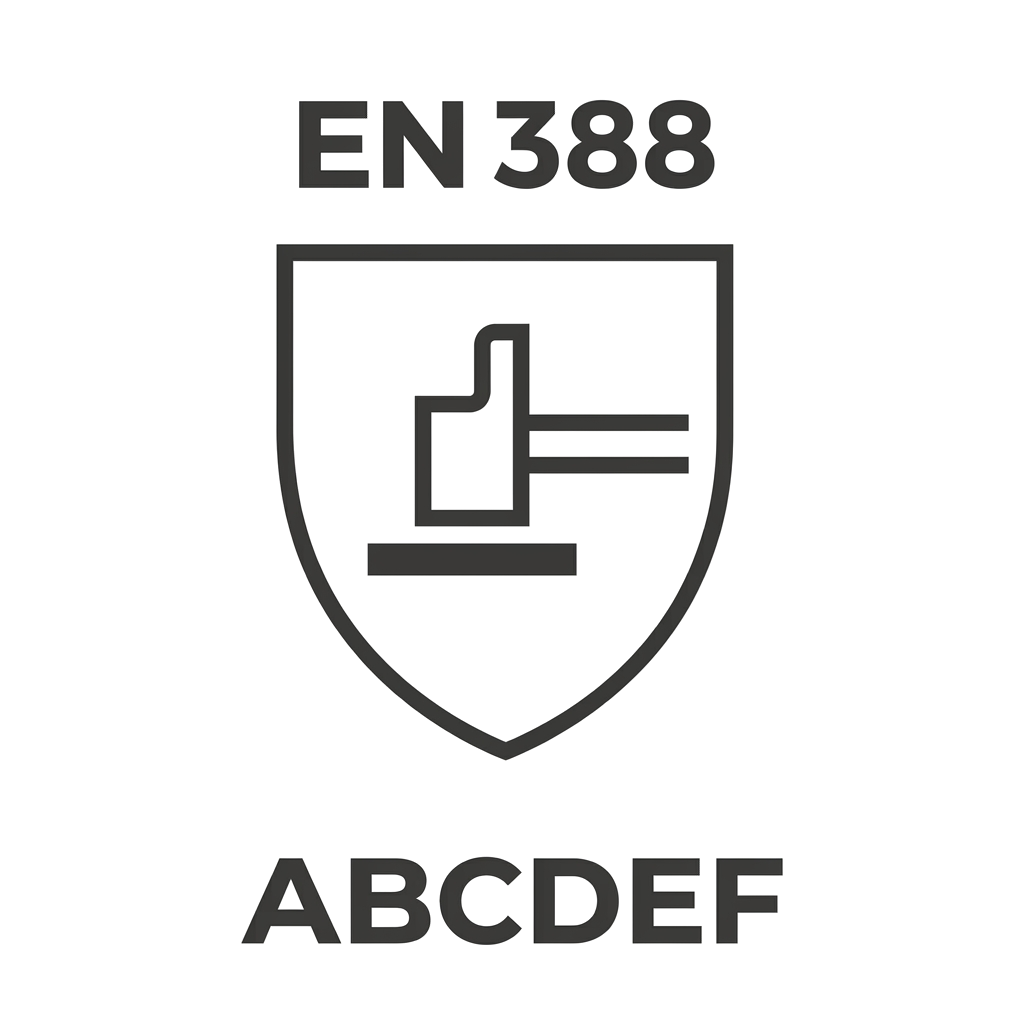
EN 388:2016 Mechanical Protection Guide
(European Standard for Protective Gloves)
| Performance ratings | 1 | 2 | 3 | 4 | 5 |
|---|---|---|---|---|---|
| A. Abrasion Resistance (Cycles) | 100 | 500 | 2,000 | 8,000 | — |
| B. Blade Cut Resistance (Coupe Test) | 1.2 | 2.5 | 5.0 | 10.0 | 20.0 |
| C. Tear Resistance (Newtons) | 10 | 25 | 50 | 75 | — |
| D. Puncture Resistance (Newtons) | 20 | 60 | 100 | 150 | — |
| ISO cut & impact ratings | ||||||
|---|---|---|---|---|---|---|
| A | B | C | D | E | F | |
| E. EN ISO Cut Resistance (Newtons) | 2 | 5 | 10 | 15 | 22 | 30 |
| F. EN Impact Protection | \ | \ | PASS | or | FAIL | \ |
Extra Notes:
- 0 = failed
- X = test not done or not relevant
- Example: "4243 X" or "3X43 C P" combines all results
ANSI/ISEA 105 rates gloves for mechanical protection—abrasion, cut, tear, puncture, and needle resistance—so your hands stay safe from cuts and scrapes.
| Property | Short description | Level |
|---|---|---|
| Abrasion Resistance | Withstands rubbing & wear | 0–6 |
| Cut Resistance | Protects against blades & sharp edges | A1–A9 |
| Tear Resistance | Resistant to ripping or tearing | 0–6 |
| Puncture Resistance | Guards against nails & splinters | 0–5 |
| Needle Puncture Resistance | Protects from fine sharp points | 0–5 |
| Impact Protection | Absorbs shocks to knuckles & fingers | Level 1–3 |
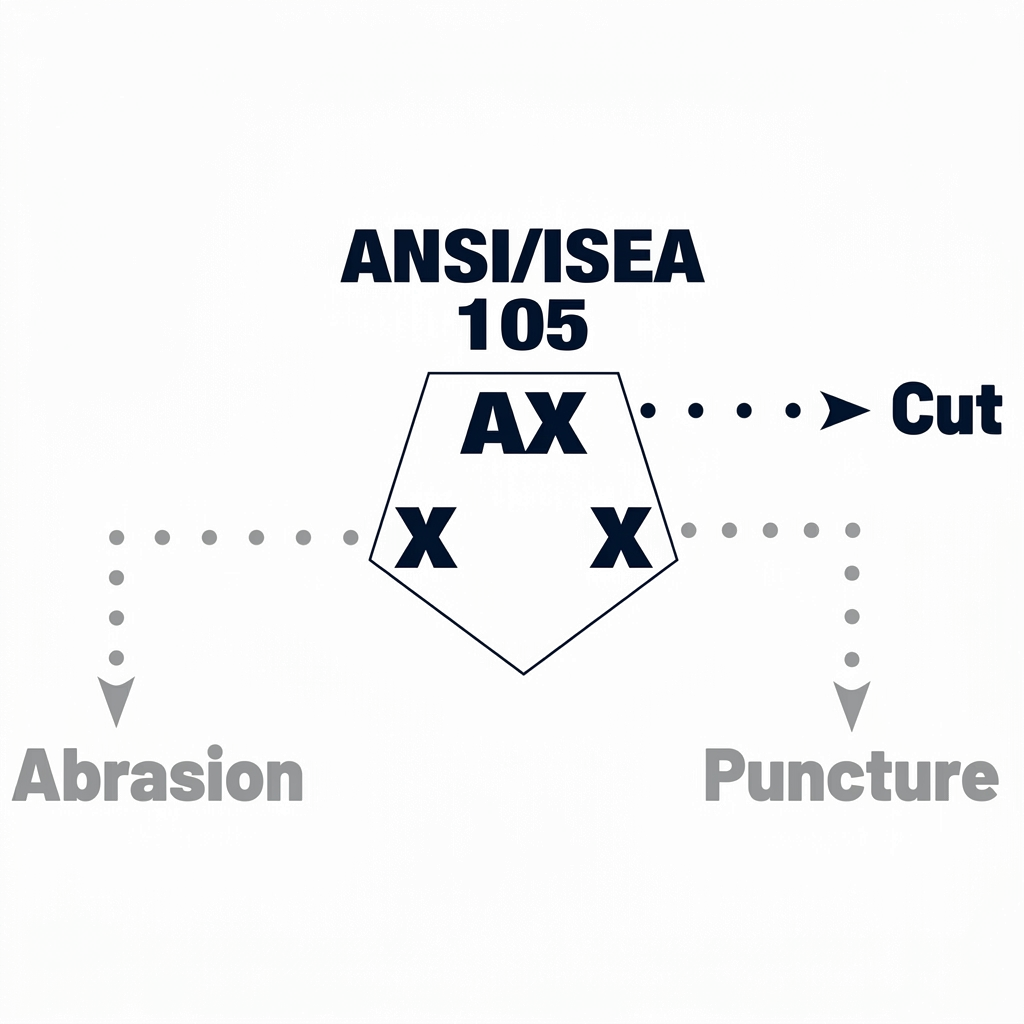
ANSI/ISEA 105-2024 Cut Resistance
| ANSI cut | Cut force (g) | Typical tasks / applications |
|---|---|---|
| A1 | ≥ 200 | General purpose, warehousing, small parts assembly |
| A2 | ≥ 500 | General purpose, plastics, injection & molding, pulp & paper |
| A3 | ≥ 1,000 | Raw material handling, general manufacturing, construction |
| A4 | ≥ 1,500 | HVAC, aerospace, food prep |
| A5 | ≥ 2,200 | Glass or metal sheet handling, automotive assembly, HVAC |
| A6 | ≥ 3,000 | Metal fabrication, glass manufacturing, changing blades |
| A7 | ≥ 4,000 | Meat prep/processing, glass manufacturing, metal stamping |
| A8 | ≥ 5,000 | Metal stamping, recycling, heavy assembly |
| A9 | ≥ 6,000 | Sharp metal stamping, recycle sorting, metal fabrication |
ANSI/ISEA 105-2024 Abrasion Resistance Guide
| ANSI level | Test load | Performance milestone | Duty intensity | Typical hazards & tasks |
|---|---|---|---|---|
| 0 | 500g | < 100 Revolutions | Minimal | Light tasks, no friction |
| 1 | 500g | 100+ Revolutions | Light Duty | Painting, Food Prep, Inspection |
| 2 | 500g | 500+ Revolutions | Light - Medium | Electronic Assembly, Pharmaceuticals |
| 3 | 500g | 1,000+ Revolutions | Medium Duty | General Assembly, Automotive |
| 4 | 1000g | 3,000+ Revolutions | Medium - Heavy | Construction, Metal Fabrication |
| 5 | 1000g | 10,000+ Revolutions | Heavy Duty | Mechanics, Warehousing, Brickwork |
| 6 | 1000g | 20,000+ Revolutions | Extra Heavy | Mining, Oil & Gas, Heavy Equipment |
ANSI/ISEA 105 Puncture Resistance Guide
(Non-Hypodermic Needle Test)
| ANSI level | Puncture force | Protection level | Typical applications |
|---|---|---|---|
| 0 | < 10 Newtons | Minimal | Paper/Cardboard Cuts, Light Parts Assembly |
| 1 | ≥ 10 Newtons | Light Duty | Packaging, Small Parts Assembly, Material Handling |
| 2 | ≥ 20 Newtons | Light - Medium | Light Construction, General Material Handling |
| 3 | ≥ 60 Newtons | Medium Duty | Manufacturing, Light Glass Handling, Metal Stamping |
| 4 | ≥ 100 Newtons | Heavy Duty | Metal Stamping, Glass Handling, Recycling, Injection Molding |
| 5 | ≥ 150 Newtons* | Extra Heavy | Oil & Gas, Mining, Heavy Construction, Demolition |
*Note: While both 4 and 5 are rated for high force, Level 5 is designed for the most extreme industrial environments.
ANSI/ISEA 105 Needle-Stick Resistance Guide
(ASTM F2878 Hypodermic Needle Test)
| ANSI level | Puncture force | Protection level | Typical applications |
|---|---|---|---|
| 1 | ≥ 2 Newtons | Low | General waste handling, janitorial services |
| 2 | ≥ 4 Newtons | Light - Medium | Medical waste, laundry services, law enforcement |
| 3 | ≥ 6 Newtons | Medium Duty | Sanitation, recycling center sorting, search/patrol |
| 4 | ≥ 8 Newtons | Heavy Duty | High-risk needle handling, waste management |
| 5 | ≥ 10 Newtons | Extra Heavy | Hazardous waste cleanup, emergency response |
ANSI/ISEA 138 covers impact protection, reducing shocks to knuckles and fingers from dropped tools or pinch hazards. Together, they ensure tested, reliable hand protection for industrial, construction, healthcare, and safety tasks.
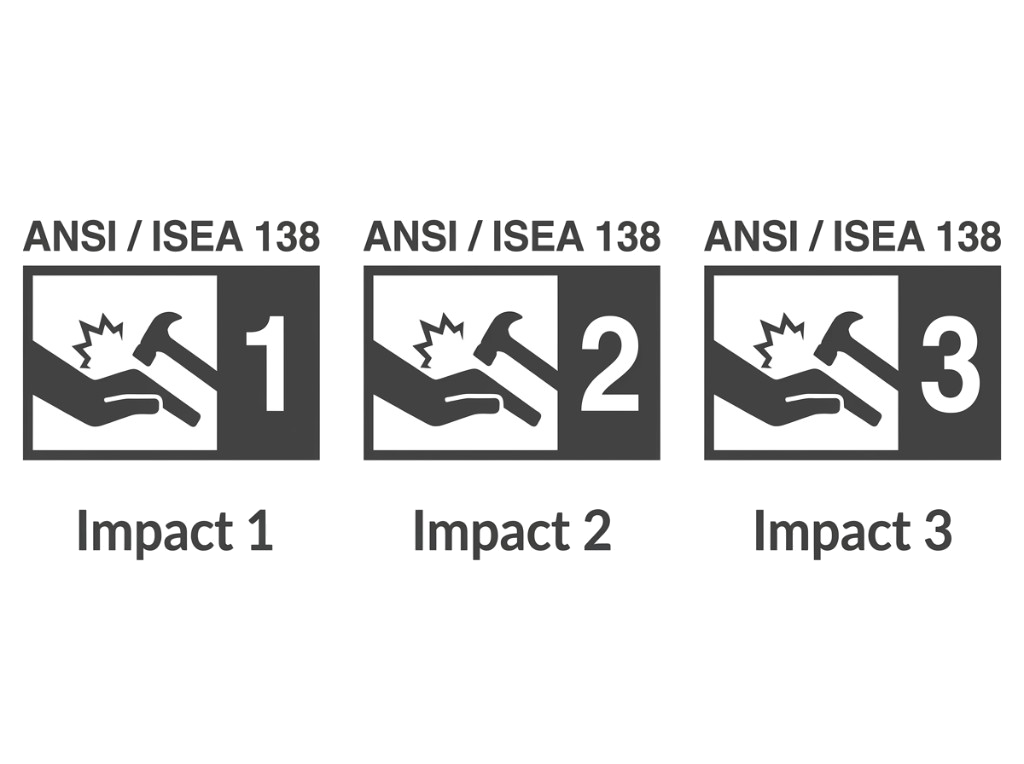
ANSI/ISEA 138 Impact Resistance Guide
| Impact level | Protection | Performance intensity | Typical tasks & environments |
|---|---|---|---|
| Level 1 | Provides minimal protection; designed to reduce the effect of low-impact hazards. | Light | General material handling, light assembly work. |
| Level 2 | Offers moderate protection; capable of withstanding medium-impact hazards. | Medium | Construction, assembly line work, light power tool use. |
| Level 3 | Delivers high protection; designed for heavy-impact hazards and extreme conditions. | High | Oil and gas work, heavy machinery, high-impact environments. |
Thermal protection (heat)
EN 407:2020 Thermal risks (heat)
This standard specifies the thermal performance of gloves for protection against heat and/or fire hazards. The pictogram is accompanied by six performance levels (1–4). If a test is not performed, the digit is replaced by an "X".
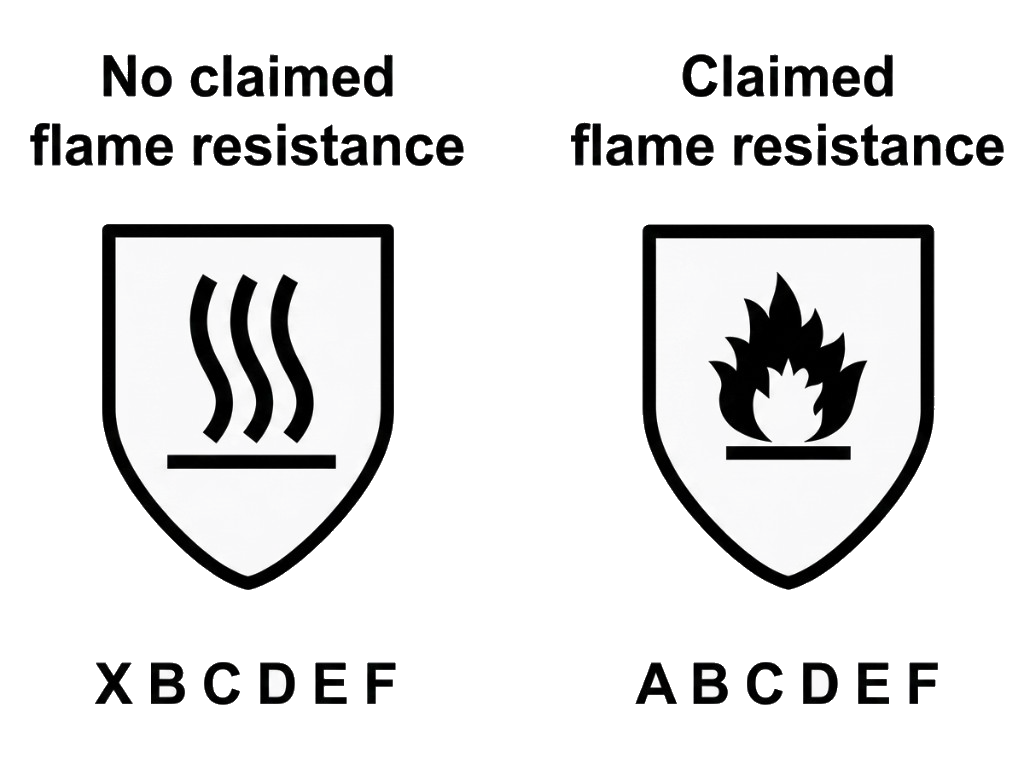
There are 2 pictograms with clear differences between flame resistance and non-flame resistance. Both pictograms may not be used at the same time.
EN 407:2020 Thermal Protection Guide
| Performance | 1 | 2 | 3 | 4 |
|---|---|---|---|---|
| A. Limited Flame Spread (After-burn time) | ≤ 20s | ≤ 10s | ≤ 3s | ≤ 2s |
| B. Contact Heat (Temp. for ≥ 15s) | 100°C | 250°C | 350°C | 500°C |
| C. Convective Heat (Heat transfer delay) | ≥ 4s | ≥ 7s | ≥ 10s | ≥ 18s |
| D. Radiant Heat (Heat transfer delay) | ≥ 7s | ≥ 20s | ≥ 50s | ≥ 95s |
| E. Small Splashes (Molten Metal) (Drops) | ≥ 10 | ≥ 15 | ≥ 25 | ≥ 35 |
| F. Large Quantities (Molten Metal) (Mass) | 30g | 60g | 120g | 200g |
Thermal protection (cold)
EN 511 Thermal risks (cold)
This standard applies to gloves that offer protection against convective and contact cold down to -50°C. The pictogram is accompanied by three performance levels. If a test is not performed, the digit is replaced by an "X".
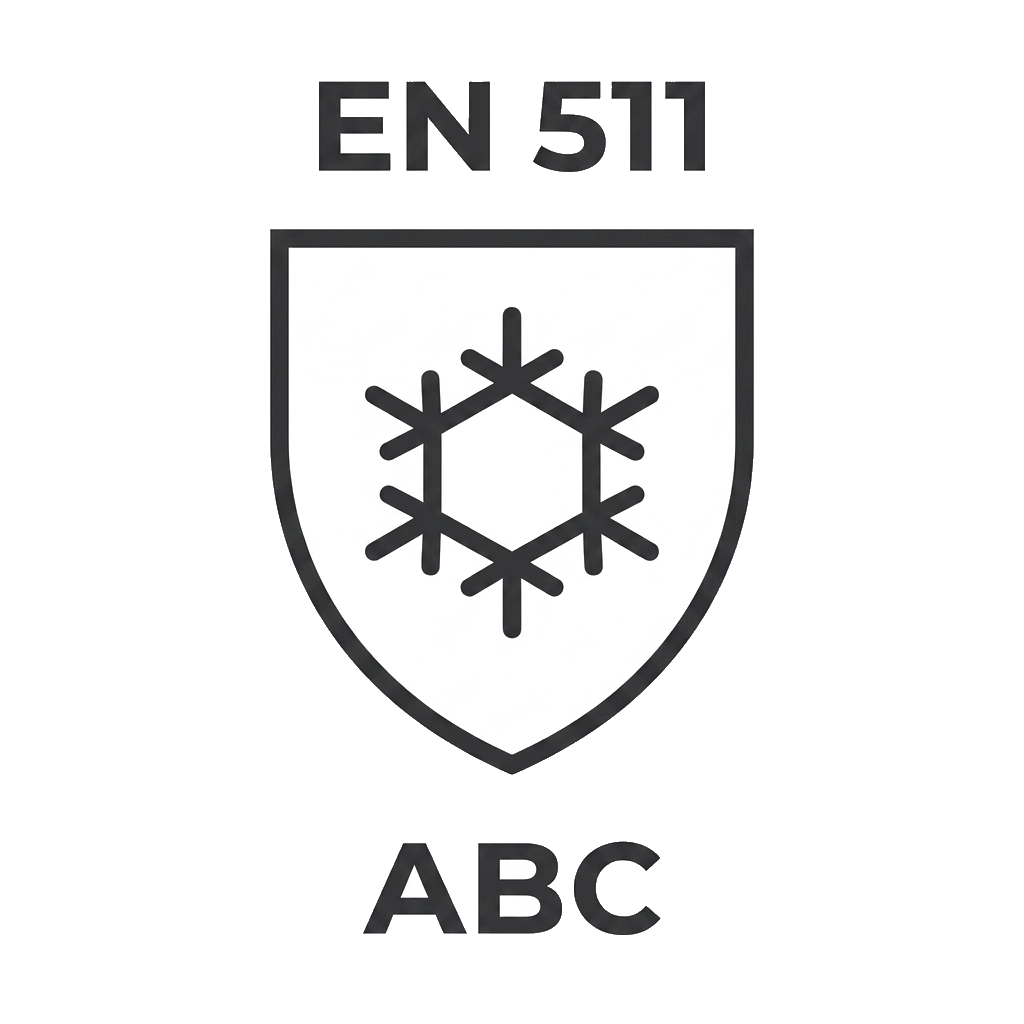
EN 511:2006 Protection Guide(Standard for Protective Gloves Against Cold)
| PERFORMANCE LEVEL | 1 | 2 | 3 | 4 |
|---|---|---|---|---|
| 1. Convective Cold (Thermal Insulation ITR in m² K/W) | 0.10 – 0.15 | 0.15 – 0.22 | 0.22 – 0.30 | ≥ 0.30 |
| 2. Contact Cold (Thermal Resistance R in m² K/W) | 0.025 – 0.050 | 0.050 – 0.100 | 0.100 – 0.150 | ≥ 0.150 |
| 3. Water Penetration (30-minute test) | PASS (1) | — | — | — |
Water Penetration: Pass (1) or Fail (0). If a glove is rated 0, it may lose its insulating properties if it gets wet.
Anti-Vibration Protection
EN ISO 10819 Anti-Vibration Protection
The EN ISO 10819:2013 (with Amendments A1:2019 and A2:2022) standard is the international benchmark for measuring and evaluating the vibration transmissibility of protective gloves. It identifies gloves that effectively reduce the risk of Hand-Arm Vibration Syndrome (HAVS), commonly known as "white finger".Common applications: jackhammers, drills, construction equipment.

EN ISO 10819 Performance Guide
The glove is tested across two frequency spectrums. Transmissibility (TR) measures how much vibration passes through the glove to the palm; a lower number means better protection.
| Frequency Range | Spectrum Type | Requirement (TR) | Performance Meaning |
|---|---|---|---|
| Medium Frequency (25 Hz – 200 Hz) | TRM | ≤ 0.90 | Must reduce vibration by at least 10% (cannot amplify it). |
| High Frequency (200 Hz – 1250 Hz) | TRH | ≤ 0.60 | Must reduce vibration by at least 40%. |
Welding
EN 12477 Welding Gloves
EN 12477:2001 is the European standard specifically for protective gloves for welders. It ensures that gloves provide a combined defense against mechanical risks (EN 388) and thermal hazards (EN 407) encountered during welding and cutting.
EN 12477 Classification: Type A vs. Type B
- Type A (Higher Protection): Recommended for welding processes where high heat and mechanical protection are critical, such as Stick (SMAW) or MIG welding. They are typically thicker and less flexible.
- Type B (Higher Dexterity): Recommended for processes requiring fine motor control and high dexterity, specifically TIG welding. They offer lower thermal and mechanical resistance
Protection Guide: Minimum Performance Levels
To be certified under EN 12477, a glove must meet the following minimum levels from the EN 388 (Mechanical) and EN 407 (Thermal) standards:
| Performance requirement | Test standard | Type A (High Protect) | Type B (High Dexterity) |
|---|---|---|---|
| Abrasion Resistance | EN 388 | Level 2 | Level 1 |
| Blade Cut Resistance | EN 388 | Level 1 | Level 1 |
| Tear Resistance | EN 388 | Level 2 | Level 1 |
| Puncture Resistance | EN 388 | Level 2 | Level 1 |
| Burning Behavior | EN 407 | Level 3 | Level 2 |
| Contact Heat Resistance | EN 407 | Level 1 | Level 1 |
| Convective Heat Resistance | EN 407 | Level 2 | Not Required |
| Small Molten Metal Splashes | EN 407 | Level 3 | Level 2 |
| Manual Dexterity | EN 420 | Level 1 | Level 4 |
Technical Requirements & Sizing
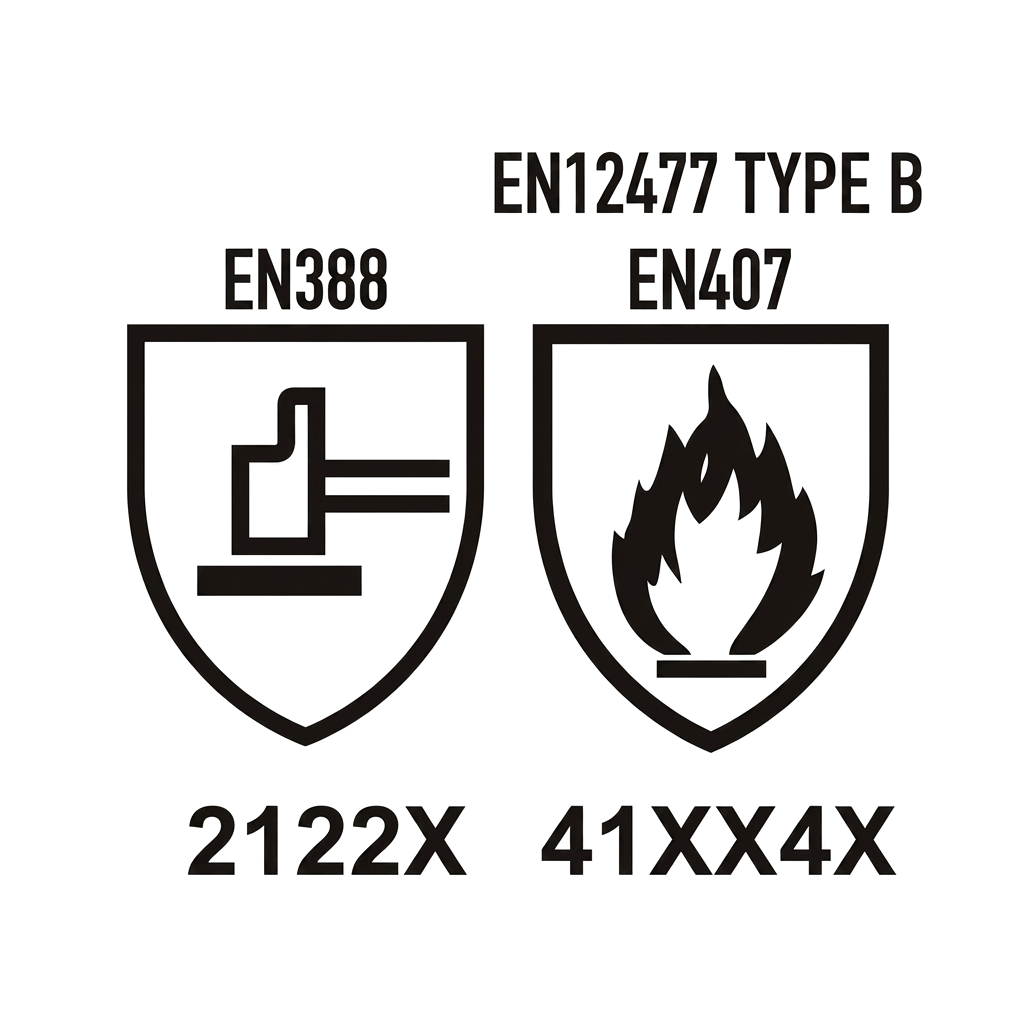
- Electrical Insulation: The standard also checks for electrical resistance. Certified gloves must provide protection against incidental contact with electrical conductors up to 100V (DC) for arc welding.
- Minimum Glove Length: Unlike standard work gloves, welding gloves must have an extended cuff to protect the wrist and forearm. The minimum length depends on the hand size:
- Size 9 (L): 330 mm
- Size 10 (XL): 340 mm
- Size 11 (XXL): 350 mm
- There is no unique EN 12477 icon; instead, the glove will display the EN 388 and EN 407 icons followed by the text "EN 12477 Type A" or "Type B", as illustrated above.
Chainsaw Protection
EN ISO 11393-4 Chainsaw Protection
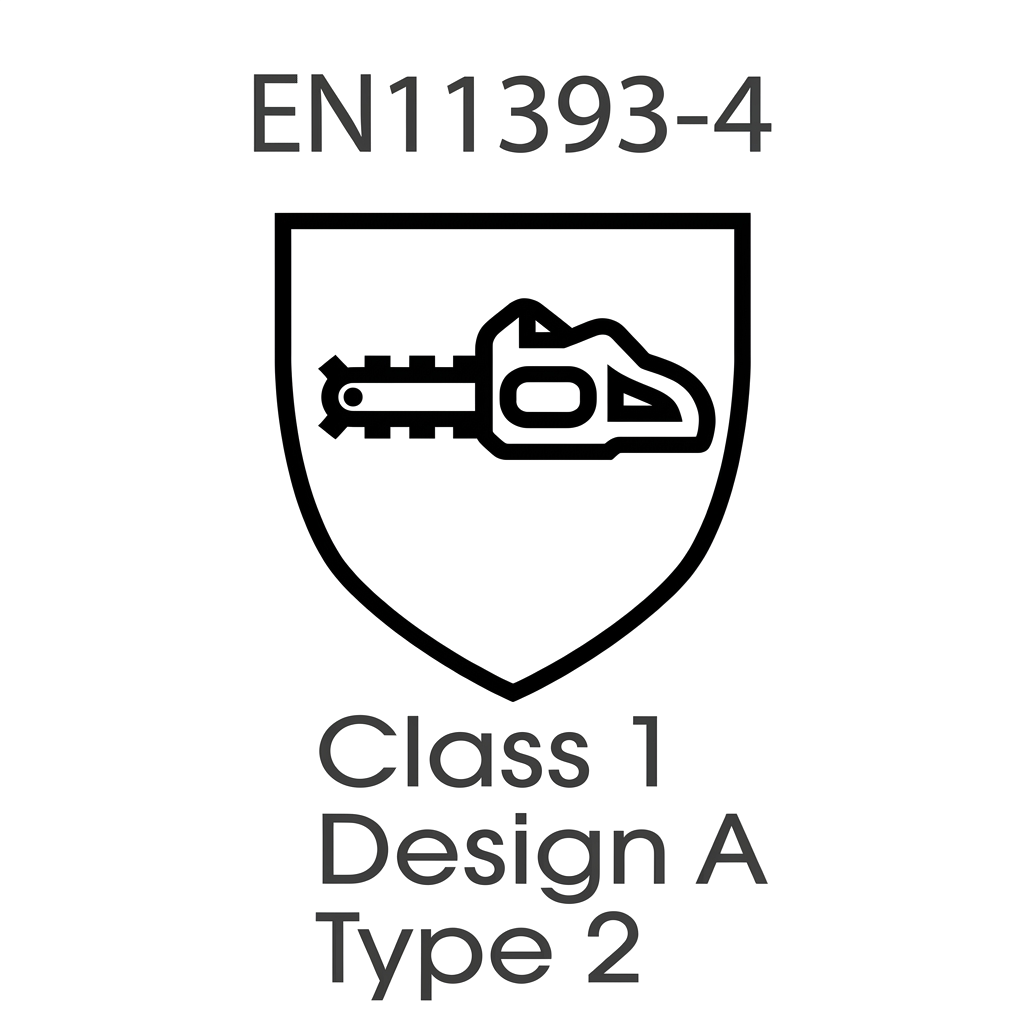
EN ISO 11393 defines the requirements for personal protective equipment (PPE) for users of handheld chainsaws. Part 4 of this standard deals with protective gloves.
Classes:
| Class | Chain speed (m/s) | Usage description |
|---|---|---|
| Class 0 | 16 m/s | Suitable for occasional users or light-duty tasks. |
| Class 1 | 20 m/s | The industry standard for professional forestry and home use. |
| Class 2 | 24 m/s | Designed for heavy-duty professional operations. |
| Class 3 | 28 m/s | Maximum protection for extreme high-power chainsaw conditions. |
Type: Hand Protection Coverage
- Type 1 gloves provide saw protection on both hands.
- Type 2 gloves offer protection only on the left hand, typically used by right-handed chainsaw operators.
Design: Protective Areas
- Design A includes protection on the back of the hand.
- Design B extends protection to both the back of the hand and the fingers.
ARC FLASH protection
1. Key Testing Standards:
- ASTM F2675 / F2675M: The primary global standard for testing the arc rating of protective gloves. It measures the thermal protection provided by the glove material when exposed to an open arc.
- NFPA 70E: The US workplace safety standard that defines the PPE Category required based on the calculated risk of an electrical environment.
2. Performance Ratings (The Numbers)
- Arc Rating (ATPV/EBT): The primary output of this test is the Arc Thermal Performance Value (ATPV) or Energy Breakopen Threshold (EBT), measured in cal/cm².
3. Protection Levels (PPE Categories)
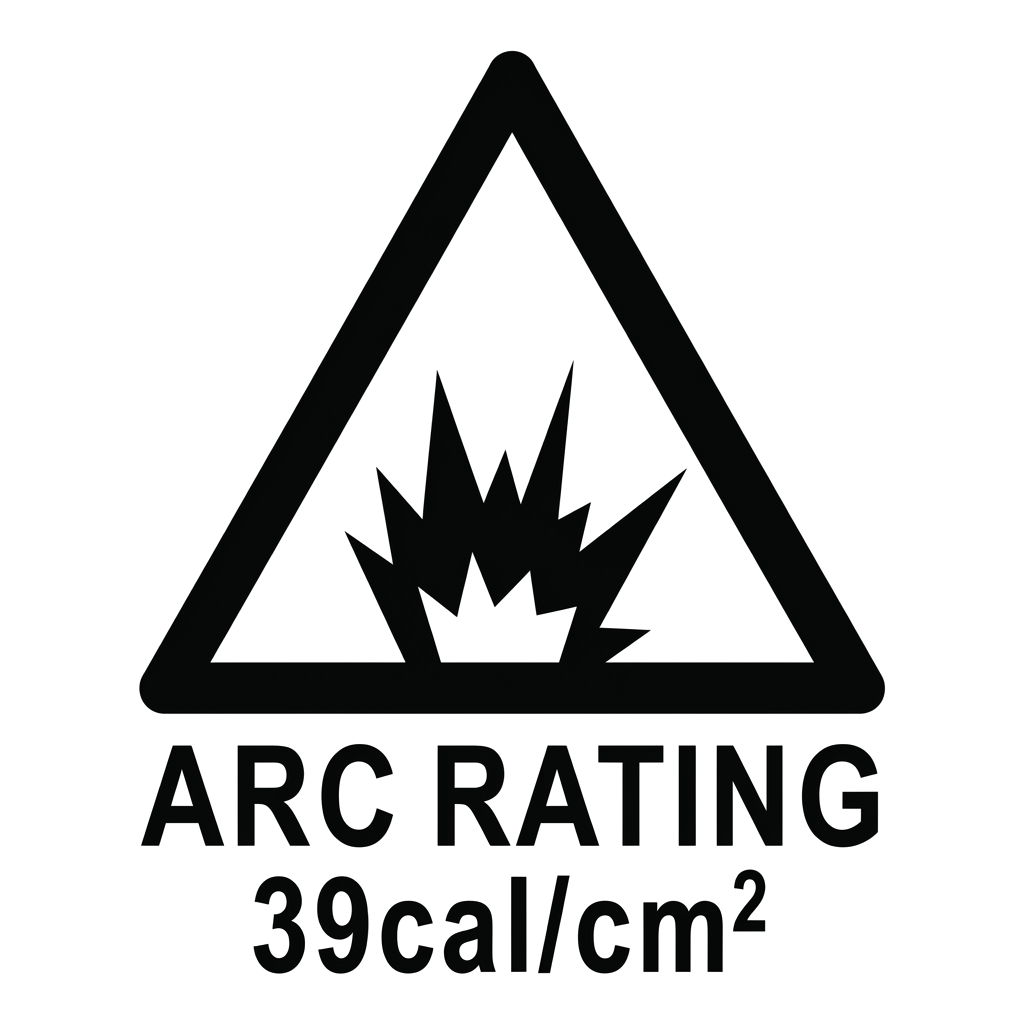
Based on NFPA 70E, arc-rated gloves are classified into four categories:
| ASTM F2675 Arc Rating | NFPA 70E PPE Category |
|---|---|
| ≥ 4 cal/cm² | Category 1 |
| ≥ 8 cal/cm² | Category 2 |
| ≥ 25 cal/cm² | Category 3 |
| ≥ 40 cal/cm² | Category 4 |